

© 2008 - 2026 Waiotemarama Falls Lodge Limited
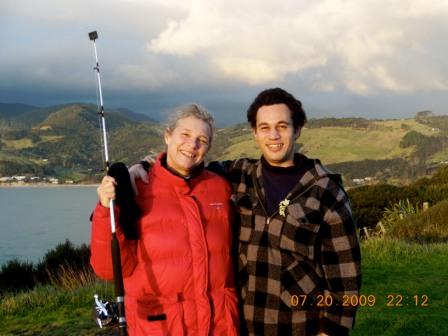
Candace grew up in San Diego, California and moved to NZ in 1976. Since then, she has worked locally as a science teacher and skippered the historic vessel (MV Sierra) on the Hokianga Harbour. She is currently an online global academic editor of research papers in science, medical research and business. She loves sailing and playing music. You will find the library at Waiotemarama Falls Lodge filled with great books!
Rawiri is New Zealand-born and of Maori descent (Ngapuhi). He has extensive experience in the hospitality industry, Youth Hostels and hosting Willing Workers on Organic Farms.
Rawiri is an accomplished musician and songwriter. He plays guitar, bass and drums. His passions are gardening and fishing.
Rawiri is an accomplished musician and songwriter. He plays guitar, bass and drums. His passions are gardening and fishing.
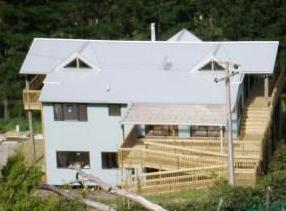
We live in the Polehouse, where we will greet you. The Lodge is 200 metres up the driveway and into the forest.
About the Hokianga
Hokianga-Nui-A-Kupe means 'the place of Kupe's great return'. Many iwi (Maori tribes) trace their ancestry back to the legendary Polynesian explorer Kupe who, with his crew, voyaged deep into the southern ocean to find New Zealand. Northland iwi claim the first landfall of Kupe's waka was on the shores of the Hokianga Harbour. Most Northland Maori can trace their ancestry to the Hokianga region; many of the country's bicultural families also have their origins here.
If you approach the Hokianga region from the south you'll have the opportunity to drive through Waipoua Forest, home of Tane Mahuta, New Zealand's largest kauri tree. Soon after you exit the forest, the Hokianga Harbour will appear dramatically in front of you. You'll see huge white sand dunes on the northern side and the twin beach towns of Omapere and Opononi on the southern side.
The Hokianga's largest town is Rawene, New Zealand’s third oldest European settlement and the home of historic Clendon house. The mangrove boardwalk makes a great stroll. From Rawene a vehicular ferry provides a connection to the other side of the harbour and the settlement of Kohukohu.
Near the settlement of Horeke is a natural phenomenon known as the Wairere Boulders. Amassed along a valley floor, this stream of huge rocks and boulders is 1.5 kilometres long. At first glance the rocks appear to be limestone formations, but they are actually basalt. The fluting on the boulders is caused by acids leaching from the kauri forests that used to exist in the area.
Hokianga-Nui-A-Kupe means 'the place of Kupe's great return'. Many iwi (Maori tribes) trace their ancestry back to the legendary Polynesian explorer Kupe who, with his crew, voyaged deep into the southern ocean to find New Zealand. Northland iwi claim the first landfall of Kupe's waka was on the shores of the Hokianga Harbour. Most Northland Maori can trace their ancestry to the Hokianga region; many of the country's bicultural families also have their origins here.
If you approach the Hokianga region from the south you'll have the opportunity to drive through Waipoua Forest, home of Tane Mahuta, New Zealand's largest kauri tree. Soon after you exit the forest, the Hokianga Harbour will appear dramatically in front of you. You'll see huge white sand dunes on the northern side and the twin beach towns of Omapere and Opononi on the southern side.
The Hokianga's largest town is Rawene, New Zealand’s third oldest European settlement and the home of historic Clendon house. The mangrove boardwalk makes a great stroll. From Rawene a vehicular ferry provides a connection to the other side of the harbour and the settlement of Kohukohu.
Near the settlement of Horeke is a natural phenomenon known as the Wairere Boulders. Amassed along a valley floor, this stream of huge rocks and boulders is 1.5 kilometres long. At first glance the rocks appear to be limestone formations, but they are actually basalt. The fluting on the boulders is caused by acids leaching from the kauri forests that used to exist in the area.

Read what people
are saying!
are saying!
"Our stay here was exceptional. The house is worlds away from any other Airbnb we've stayed in (indeed it feels almost rude to call it an Airbnb). From the kindness and involvement of our hosts to the beauty of the place and its story, it all felt otherworldly and luxurious. You could pay 5x the price for this experience. Candy and Rawiri are incredibly generous people, and we feel extremely lucky to have stumbled upon this place. My only advice is to stay here as long as you can!" Guest, January 2026
About Us
Waiotemarama Falls Lodge
Extraordinary Private Accommodation Experience
Kauri Coast, Opononi, Northland, New Zealand
Extraordinary Private Accommodation Experience
Kauri Coast, Opononi, Northland, New Zealand

and Kiwi Sanctuary!

Waiotemarama Falls Lodge is the Hokianga's finest accommodation experience.
See the real New Zealand bush!
Activities include hiking, fishing, hunting, birdwatching, stargazing, horsetrekking, Maori culture experiences, art trails, the Waipoua Forest and so much more!
Book now for this unique accommodation experience.
See the real New Zealand bush!
Activities include hiking, fishing, hunting, birdwatching, stargazing, horsetrekking, Maori culture experiences, art trails, the Waipoua Forest and so much more!
Book now for this unique accommodation experience.
Kia ora
Nau mai
Haere mai
Welcome
Nau mai
Haere mai
Welcome


"The Heart
of the
Kauri Coast"
of the
Kauri Coast"
(c)